Germany has a large mechanical-engineering base, and DIN/ISO terminology is common in machinery documentation. For a replacement pulley, German buyers often need a clear dimensional match to an existing drawing rather than a generic “equivalent” description.
If the machine documentation cites DIN 2211 or ISO 4183, include that reference in the RFQ together with the exact belt section. Keep any inspection, balancing or documentation requirement explicit instead of assuming it from the country alone.
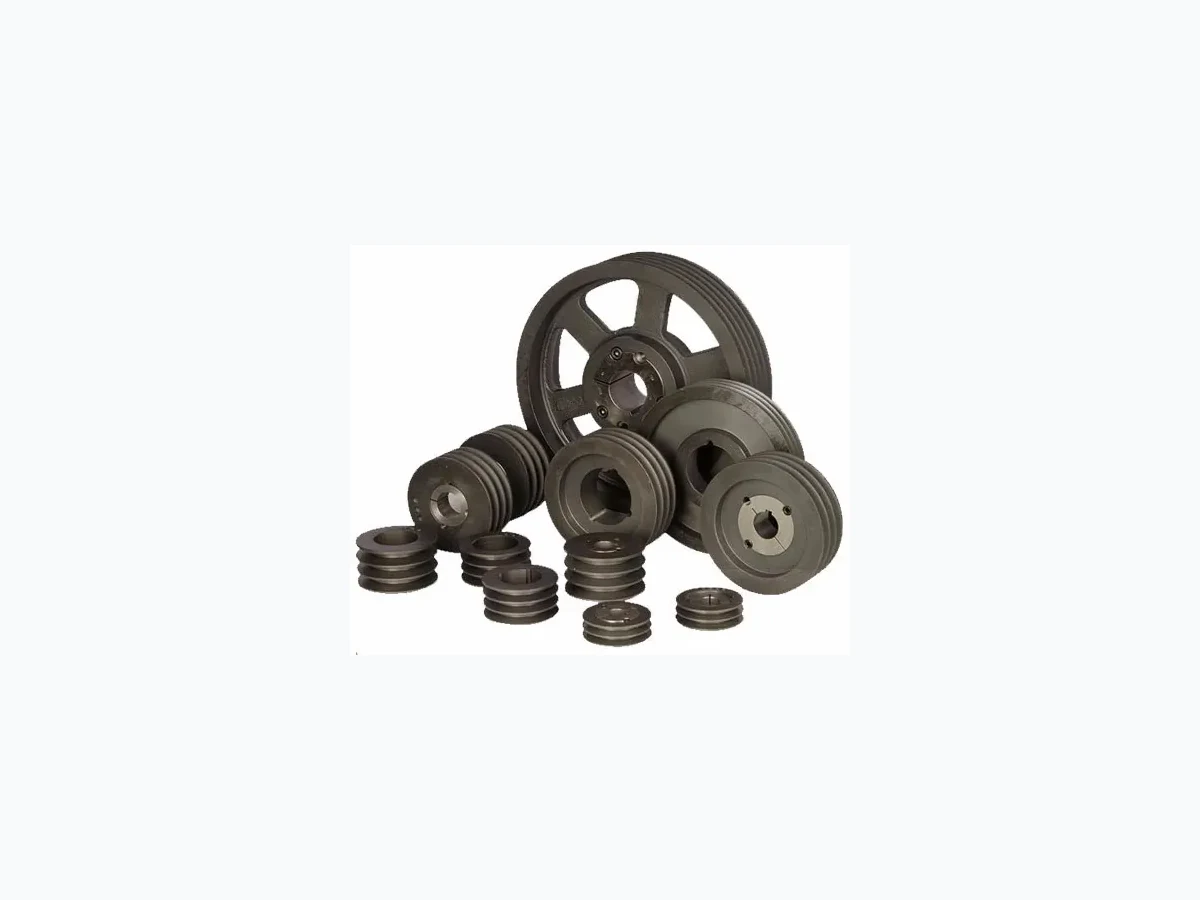
Industries and buyer priorities in Germany
| Industry | Typical belt-drive context | RFQ emphasis |
|---|---|---|
| Industrial machinery | Machine drives, spindles and conveyors | DIN/ISO terminology, dimensional repeatability |
| Automotive manufacturing | Test rigs and auxiliary machinery | Assembly consistency, balance requirements when specified |
| Agricultural machinery | Harvesters, seeders and fertilizer equipment | Outdoor contamination, quick replacement |
| Woodworking | Band saws, planers and sanders | Smooth running, dust exposure |
| Pumps & compressors | Industrial pumps and compressors | 3–6 groove torque capacity, accurate ratio |
| Textile machinery | Spinning and weaving machinery | High-speed stability, low vibration |
| Environmental equipment | Fans, agitators and treatment equipment | Multi-groove large-diameter drives |
Terminology and standards context
Use the exact SPA/SPZ/SPB/SPC belt section and the machine’s DIN/ISO reference if present. Do not convert a European SP profile to another groove system without checking the belt and pulley dimensions.
Replacement workflow
1. Confirm the belt section
Read the marking on the existing belt or machine drawing. SPA, SPZ, SPB and SPC use different groove geometries.
2. Confirm the required ratio
Use the pitch/datum diameters, not the outside diameters, when checking driver and driven speed.
3. Choose the groove count
The groove count affects power capacity, axial width and the number of matched belts in the drive.
4. Match the shaft interface
Check shaft diameter, keyway and the recommended taper-bush designation for the exact row.
5. Check the machine envelope
Compare outside diameter and axial dimensions with the guard, bearings and adjacent components.
6. Record the RFQ details
Send the model or measurements, speeds, shaft, application and any drawing/replacement reference.
Documentation to prepare before enquiry
Prepare a dimensional RFQ
Send the model or measurements, shaft diameter, speed data, application, quantity and destination to [email protected].